I loved reading as a kid. I'd read anything I could get my hands on (which is why newspapers were briefly banned in the Nerd house after I asked my Mum what 'molestation' was at the age of six). But when it came to kids books I only had Enid Blyton, Roald Dahl, Sweet Valley High and The Worst Witch for company. By 11 I'd moved onto Bronte, Austen and Alcott, at a loss for any more kids adventure books to read.
I didn't discover kids books again until I got Harry Potter books 1-3 for my 15th birthday. A little too old, perhaps, but I loved them. They took me right back to that excited kid who used to run around the playground pretending I was Mildred Hubble on her broomstick. I, like millions of others, was hopelessly hooked.
Suddenly, the publishers who'd never really put much faith in children's books pricked up their bank accounts. Ever since then, the children's section in book shops has been growing like ivy, encroaching on Fiction A-Z and Classics, covered from floor to ceiling in enticing multi-coloured spines and little plastic chairs for the kids who can't wait until they get home to read the first chapter. I don't remember having that when I was little. I remember the children's section of my local library had a very itchy carpet (which didn't put me off settling down there surrounded by heaps of adventures) but I don't remember ever having a place I could go that just screamed "Read in me! I'm fun!"
With Twilight boosting the teen market, young literature has experienced an unprecidented boom in the last few years. A constant stream of new titles are bombarding a previously overlooked audience. Sure, some are rubbish (I'm looking at you, sub-Twilight supernatural romance genre), but some kids books are brilliant.
Frankly, when my choice is between a brutal portrayal of Occupied Iraq or a book with a skeleton detective on the cover (Skulduggery Pleasant is brilliant), then there's rarely any competition. Yes, I'm a grown-up. Yes, I studied English at uni and am still a voracious reader spanning all genres, but sometimes a bit of escapism is needed, and where better to escape to than childhood?
Harry Potter though is in a special league. Chances are most adults haven't read Skullduggery Pleasant or Artemis Fowl, but they have read Harry Potter. Similarly, there's Philip Pullman's His Dark Materials trilogy, which got a wee bit lost in the Harry Potter hype but is actually the better series, a brilliantly complex exploration of religion, the soul, innocence and growing up, borrowing from writers like Blake and Milton. Like Potter, it has a cross-generational appeal that frankly boggles the mind and no doubt causes pound signs to flash in publisher's eyes. The Book Thief by Markus Zusak is another kids books that soon found a wider audience on the adult side of the market thanks to its unflinching and beautifully written exploration of one girl in Germany during World War 2.
A few years ago adults could only read kids books with a flush of nostalgia, with even the rose-tinted glasses not able to shelter them from how unchallenging and childish their favourite childhood book was. Authors like JK Rowling, Philip Pullman and recently Carlos Ruiz Zafon (The Prince of Mists is ace) have upped the standards for kids literature. They don't talk down to them. They introduce complex moral ideas and terrifying monsters, they make their readers feel and think instead of just getting swept along, or rushing to the end so that they can find out what happens and never think of it again.
Harry Potter has kickstarted a publishing boom that will shape new generations of readers, kids who know that reading is fun and not just a chore. They could become the writers of tomorrow, or a more discerning audience demanding top quality literature. They could make the journey from Rowling to Gaiman and Tolkian in search of adventure, from Meyers to Bronte and Shakespeare in search of romance. And that makes this reader very happy.
Monday, 11 July 2011

Saturday, 9 July 2011
PotterMania: Best casting
As the final film in the Harry Potter franchise approaches, all of us who gave over huge chunks of our lives to both the books and films are feeling especially nostalgic for lost childhoods (although at 25 I think I misplaced mine quite some time ago). The series is a phenomenon - and a brilliantly realised one at that. The chances of its success and impact being repeated in my lifetime are slim. Plus, I love it.
So, I'm going to write a series of articles in the run up to Harry Potter and the Deathly Hallows Part 2, starting with this one: The 10 best actor-and-character marriages in the film franchise, in no particular order:
Robbie Coltrane - Hagrid
 Robbie Coltrane was famously one of the only actors that JK Rowling had in mind for the films, and there was never anyone else who could have played the friendly dragon-loving half-giant. He's utterly loveable as Harry's substitute uncle-figure, and although his role has been minimal in the more recent films he's always a solid presence.
 Thank goodness Helen McCrory's pregnancy robbed David Yates of his first choice for Bellatrix, because I can't imagine anyone else as the shrieking, wild-haired loon that is Voldemort's right-hand-woman. In Bellatrix, the wonderful Bonham-Carter might just have found her iconic role.
 The first two films tend to be forgotten in favour of the superior subsequent ones, but one thing that deserves to be remembered is Kenneth Branagh's gloriously pompous portrayal of the five-time winner of Witch Weekly's Most Charming Smile Award. I had my heart set on Hugh Grant for the role, but Branagh won me over, and then some.
Brendon Gleeson - Mad-Eye Moody
 Brendan Gleeson isn't exactly one of the most famous thesps to be signed up to the Harry Potter franchise, but he was the perfect match for the gruff, paranoid Mad-Eye Moody, working equally well as the evil Barty Crouch Jnr and as the just-as-barking real Mad-Eye. Shame he had to be killed off.
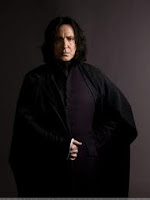 Need I even explain this choice? I can't wait to see Rickman get his teeth into That Scene in Deathly Hallows Part 2. No-one swishes a cloak quite like him.
 This was the role that put Jason Isaacs and his steely blue eyes on the map. He was a revelation in his first appearence in Chamber of Secrets, and has just got better as Lucius becomes increasingly frayed around the edges.
Evanna Lynch - Luna Lovegood
 Evanna Lynch managed to be completely eccentric and 14 at the same time. Quite a feat. Her lilting tones and look of mild interest at all times is spot-on Luna. I'm not sure if she's actually doing any acting or just playing herself, but it's perfect casting.
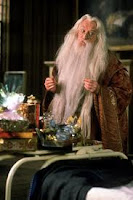 Nothing against Michael Gambon's also-pretty-damn-good version of Dumbledore, but Richard Harris was the first and best, giving Dumbledore a benign playfulness wrapped around a steel core. It's a shame we never got to see him as the hard-as-nails sorceror he is revealed as in later films - I suspect that you wouldn't have wanted to mess with Richard Harris' Dumbledore.
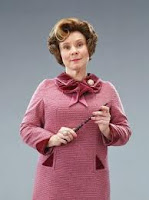 Who would have thought that a cat lover with a fetish for pink and torturing school children could be far scarier than Voldemort? Staunton brings the Potterverse's nastiest and most realistic villain to horrible life and sends chills down your spine with merely a child-like giggle.
 Daniel Radcliffe has improved immeasurably as the series has gone on (and with it become someone I'd happily go for a pint with) and Emma Watson maturing into a confident, beautiful woman has fed nicely into Hermione's character development, but Rupert Grint was always the most talented, and the one who nailed his part just right. From comedy relief to unlikely brooding hero, chances are in a scene with all three lead kids in it, it'll be Grint you're watching.
And finally, special shout-outs to Tom Felton, Julie Walters and Matthew Lewis, who only narrowly missed out. Which I'm sure will keep them up all night worrying.
So, I'm going to write a series of articles in the run up to Harry Potter and the Deathly Hallows Part 2, starting with this one: The 10 best actor-and-character marriages in the film franchise, in no particular order:
Robbie Coltrane - Hagrid
Robbie Coltrane was famously one of the only actors that JK Rowling had in mind for the films, and there was never anyone else who could have played the friendly dragon-loving half-giant. He's utterly loveable as Harry's substitute uncle-figure, and although his role has been minimal in the more recent films he's always a solid presence.Helena Bonham-Carter - Bellatrix Lestrange
Thank goodness Helen McCrory's pregnancy robbed David Yates of his first choice for Bellatrix, because I can't imagine anyone else as the shrieking, wild-haired loon that is Voldemort's right-hand-woman. In Bellatrix, the wonderful Bonham-Carter might just have found her iconic role.Kenneth Branagh - Gilderoy Lockhart
The first two films tend to be forgotten in favour of the superior subsequent ones, but one thing that deserves to be remembered is Kenneth Branagh's gloriously pompous portrayal of the five-time winner of Witch Weekly's Most Charming Smile Award. I had my heart set on Hugh Grant for the role, but Branagh won me over, and then some.Brendon Gleeson - Mad-Eye Moody
Brendan Gleeson isn't exactly one of the most famous thesps to be signed up to the Harry Potter franchise, but he was the perfect match for the gruff, paranoid Mad-Eye Moody, working equally well as the evil Barty Crouch Jnr and as the just-as-barking real Mad-Eye. Shame he had to be killed off.Alan Rickman - Severus Snape
Need I even explain this choice? I can't wait to see Rickman get his teeth into That Scene in Deathly Hallows Part 2. No-one swishes a cloak quite like him.Jason Isaacs - Lucius Malfoy
This was the role that put Jason Isaacs and his steely blue eyes on the map. He was a revelation in his first appearence in Chamber of Secrets, and has just got better as Lucius becomes increasingly frayed around the edges.Evanna Lynch - Luna Lovegood
Evanna Lynch managed to be completely eccentric and 14 at the same time. Quite a feat. Her lilting tones and look of mild interest at all times is spot-on Luna. I'm not sure if she's actually doing any acting or just playing herself, but it's perfect casting.Richard Harris - Dumbledore
Nothing against Michael Gambon's also-pretty-damn-good version of Dumbledore, but Richard Harris was the first and best, giving Dumbledore a benign playfulness wrapped around a steel core. It's a shame we never got to see him as the hard-as-nails sorceror he is revealed as in later films - I suspect that you wouldn't have wanted to mess with Richard Harris' Dumbledore.Imelda Staunton - Dolores Umbridge
Who would have thought that a cat lover with a fetish for pink and torturing school children could be far scarier than Voldemort? Staunton brings the Potterverse's nastiest and most realistic villain to horrible life and sends chills down your spine with merely a child-like giggle.Rupert Grint - Ron Weasley
Daniel Radcliffe has improved immeasurably as the series has gone on (and with it become someone I'd happily go for a pint with) and Emma Watson maturing into a confident, beautiful woman has fed nicely into Hermione's character development, but Rupert Grint was always the most talented, and the one who nailed his part just right. From comedy relief to unlikely brooding hero, chances are in a scene with all three lead kids in it, it'll be Grint you're watching.And finally, special shout-outs to Tom Felton, Julie Walters and Matthew Lewis, who only narrowly missed out. Which I'm sure will keep them up all night worrying.
Saturday, 11 June 2011
Secret Six: We hardly knew ye
It's maybe not the most surprising omission from the DC reboot's September titles (that honour probably goes to the JSA - and all the Golden Age characters...) but it's the one that has had the biggest affect on me. Gail Simone's brilliant Secret Six has been cancelled. So allow me to take a moment to eulogise my favourite comic (and, as a long-standing Bat-family fan, that's a big statement for me to make).  The Secret Six formed in 2005 in Villains United, a mini-series during Infinite Crisis, and led to a Secret Six limited series in 2006, before finally getting an ongoing in 2008. There have been changes to the team over that time (Knockout, Mad Hatter, Harlequin) but they soon settled on the dream team of Scandal Savage, Catman, Deadshot, Ragdoll, Bane and Jeanette. Like the team themselves, Secret Six was the outsider at DC, out of place alongside black-and-white heroes and villains, but always managing to scrape through and triumph when, by all rights, it should have been cancelled a long time ago. It's hardly family friendly, it repaid the long-term rather than casual reader, and never sold huge numbers. But it was critically acclaimed by anyone who ever picked it up and many comics creators named it as a favourite. It survived beyond its natural shelf-life by sheer talent. It was one of the best books DC was putting out with as passionate a fanbase as any title could ask for.
Secret Six's unlikely survival thus far led fans to hope it would live to fight (and bicker, and kill, and dress up monkeys) another day after Flashpoint. But sadly it was not to be. I understand why. But my initial reaction was still FUCK YOU DC!!
But on reflection, sometimes it's best to have something short and sweet. This way we fans get a perfect contained series, with closure, steered the whole way by Simone. I would have hated to see the Six palmed off on another writer, as I doubt anyone else could acheive Simone's twisted balance of humour, hyper-violence and pathos. No other writer would have even considered giving wacky psycho Ragdoll a heroic moment, rising to his full height and standing up to Deadshot, or of developing an odd father-daughter relationship between Scandal and Bane.
Much has been made of what Secret Six did for LGBT fans and female fans. The team leader Scandal, is a lesbian, Ragdoll is a eunuch, Jeanette is a strong enough lady to actually bring down Wonder Woman, Catman is hunkified in a way usually reserved soley for Dick Grayson, and, of course, we can't forget the slash-friendly bromance between Catman and Deadshot.
 But it seems wrong to praise the series for its political agenda, because I don't think it had one. It's not populated with LGBT characters - it's populated with good ones. Deadshot was the only character with any real credibility when the series first started. Catman was a joke and Bane was a fairly one-note villain. Simone made them better than they'd ever been. Ever. Which, admittedly, in Catman's case wasn't hard. But who would have guessed that he'd work so well with Deadshot, or that by the time of the Cats in the Cradle arc he'd be an utterly believable bad-ass, someone who, had it not been for defining events in childhood, could have actually been the hero he always wanted to be. His dying line in the brilliantly bonkers Western one-shot was just so perfect, coming as it did directly after the conclusion to Cats in the Cradle.
The new characters have also made an impressive enough impact to, hopefully, survive in the DCU outside of the comic that spawned them. Ragdoll is probably the weirdest character ever to grace the pages of a mainstream comic book (see his musings on slavery/butterflies). Jeanette's reveal as a Banshee was genius. And as for Scandal Savage, the immortal estranged daughter of Vandal Savage, she's probably the best of the bunch. She's come a long way from the emotionally-detached, strait-laced coordinator she was in Villains United. Now Scandal is just as likely to lead with her heart as Catman is, making Jeanette and Bane, of all people, the level-headed team members. The four core members - Scandal, Catman, Deadshot and Ragdoll - are as believable as any fictional family.
The Secret Six formed in 2005 in Villains United, a mini-series during Infinite Crisis, and led to a Secret Six limited series in 2006, before finally getting an ongoing in 2008. There have been changes to the team over that time (Knockout, Mad Hatter, Harlequin) but they soon settled on the dream team of Scandal Savage, Catman, Deadshot, Ragdoll, Bane and Jeanette. Like the team themselves, Secret Six was the outsider at DC, out of place alongside black-and-white heroes and villains, but always managing to scrape through and triumph when, by all rights, it should have been cancelled a long time ago. It's hardly family friendly, it repaid the long-term rather than casual reader, and never sold huge numbers. But it was critically acclaimed by anyone who ever picked it up and many comics creators named it as a favourite. It survived beyond its natural shelf-life by sheer talent. It was one of the best books DC was putting out with as passionate a fanbase as any title could ask for.Secret Six's unlikely survival thus far led fans to hope it would live to fight (and bicker, and kill, and dress up monkeys) another day after Flashpoint. But sadly it was not to be. I understand why. But my initial reaction was still FUCK YOU DC!!
But on reflection, sometimes it's best to have something short and sweet. This way we fans get a perfect contained series, with closure, steered the whole way by Simone. I would have hated to see the Six palmed off on another writer, as I doubt anyone else could acheive Simone's twisted balance of humour, hyper-violence and pathos. No other writer would have even considered giving wacky psycho Ragdoll a heroic moment, rising to his full height and standing up to Deadshot, or of developing an odd father-daughter relationship between Scandal and Bane.
And let's not forget the artists, with especially Nicola Scott and J. Calafiore capturing the characters and the dynamics of the books perfectly. And those covers are works of art. But hey, I'm a writer myself, I can't help but praise them higher than the artist.
Much has been made of what Secret Six did for LGBT fans and female fans. The team leader Scandal, is a lesbian, Ragdoll is a eunuch, Jeanette is a strong enough lady to actually bring down Wonder Woman, Catman is hunkified in a way usually reserved soley for Dick Grayson, and, of course, we can't forget the slash-friendly bromance between Catman and Deadshot.
But it seems wrong to praise the series for its political agenda, because I don't think it had one. It's not populated with LGBT characters - it's populated with good ones. Deadshot was the only character with any real credibility when the series first started. Catman was a joke and Bane was a fairly one-note villain. Simone made them better than they'd ever been. Ever. Which, admittedly, in Catman's case wasn't hard. But who would have guessed that he'd work so well with Deadshot, or that by the time of the Cats in the Cradle arc he'd be an utterly believable bad-ass, someone who, had it not been for defining events in childhood, could have actually been the hero he always wanted to be. His dying line in the brilliantly bonkers Western one-shot was just so perfect, coming as it did directly after the conclusion to Cats in the Cradle.The new characters have also made an impressive enough impact to, hopefully, survive in the DCU outside of the comic that spawned them. Ragdoll is probably the weirdest character ever to grace the pages of a mainstream comic book (see his musings on slavery/butterflies). Jeanette's reveal as a Banshee was genius. And as for Scandal Savage, the immortal estranged daughter of Vandal Savage, she's probably the best of the bunch. She's come a long way from the emotionally-detached, strait-laced coordinator she was in Villains United. Now Scandal is just as likely to lead with her heart as Catman is, making Jeanette and Bane, of all people, the level-headed team members. The four core members - Scandal, Catman, Deadshot and Ragdoll - are as believable as any fictional family.
I, like many other comic readers, could easily have missed Secret Six altogether. Luckily, someone at my local library is a massive Six fan. My library doesn't have a single Batman trade post-2008, but it somehow has every trade of Secret Six. So, thank you whoever it is that keeps ordering them in - you introduced me to the only team of villains I've ever cheered for, the ultimate DC underdogs, mercenaries with hearts (yes, even Deadshot), funny and dark and tragic. If you haven't read it yet, go out and pick up Villains United or Six Degrees of Devestation. You'll owe me one.
I look forward to seeing how Simone wraps the series up - I'm sure it'll be the perfect ending for the comic that brought me Ragdoll in Wonder Woman's boots and the line "our secret weapon is a hat junkie".
Thanks for the memories, Gail! And fuck you DC. Okay, maybe I'm still working out my anger issues on this one.
Wednesday, 8 June 2011
DC Reboot
I've been through all the stages of grief that are to be expected when such monumental news is announced. Some were stronger than other (denial lasted a while and keeps making a comeback) but I'm tentatively feeling my way to acceptance. Thank God we're not going back to year dot and that recent, brilliant characters still have a home (Damien is safe. Phew.) I can see why this is a savvy business decision. To be honest it might even make me start picking up some books (as it stands I read trades rather than comics). But I have a number of requests. Blind hopes, perhaps.


 He seems to have both his arms now, which I hope means he also has a daughter in tow. Being a single father was his superhero USP and I liked it. You can keep the drug addict history - I like that too. Kind of excited about seeing him, Red Hood and Starfire in a book together (although I don't like the idea of them turning the gloriously happy Starfire into a 'dark' character) If Cass Cain no longer has a home in the Batfamily, she could do worse than popping up in this book with the fellow screw-ups. Renee Montoya could have a home here too.
So, DC, pretty pretty please...
Don't get rid of Oracle
Too late for this, perhaps, as it seems a fully-mobile Barbara Gordon is back as Batgirl. Let's scoot right over what this means for Cass and Steph (will they never have been Batgirl in this universe? Will they even exist?) and even ignore the PC implications in getting rid of their only main character who uses a wheelchair. Instead, let's look at what this means for Babs. She was recently voted DC's most kick-ass female by DC Women Kickin Ass. If she had remained Batgirl all this time, she would have been booted out in the preliminaries. Fact is, Babs became infinitely more interesting when she emerged from a pointless and misogynistic editorial edict intended to make her a victim as someone far stronger than the perky cardboard cut out superheroine she had been before. As Oracle she became one of DC's best characters, of any gender or physical ability. Babsgirl, in comparison, is dull and uninspiring.
I'm still hoping that this cover is a fake-out. The background is an Oracle shade of green and Gail Simone's write-up about the series is slightly open to interpretation. Could this actually be the Batgirl online avatar that Grant Morrison teased? Might Babs be some sort of web-only Batgirl, with Steph or Cass still donning the suit in the real world? I will cling to that hope until DC prises it from my sad and disillusioned fingers. Also, the fact that Simone is writing this book also gives me hope - she's the writer largely responsible for why Oracle became so popular.
Don't make Damien well-adjusted
If he's not still an arrogant, stab-happy borderline psychopath I will be sorely disappointed.
Don't cock up the Birds of Prey
Initially I was put off by a man on writing duties (Duane Swiercszynski - who?) but then I remembered that some of my favourite superheroine books were written by men (Palmiotti and Gray on Power Girl, Brubaker on Catwoman) so I got over my blatant sexism. But where is the dream team of Oracle, Black Canary, Huntress and Lady Blackhawk? I'm currently fearful for the fate of the latter two.
Fix Roy Harper
He seems to have both his arms now, which I hope means he also has a daughter in tow. Being a single father was his superhero USP and I liked it. You can keep the drug addict history - I like that too. Kind of excited about seeing him, Red Hood and Starfire in a book together (although I don't like the idea of them turning the gloriously happy Starfire into a 'dark' character) If Cass Cain no longer has a home in the Batfamily, she could do worse than popping up in this book with the fellow screw-ups. Renee Montoya could have a home here too.Actually follow through when you say that the reboot makes the DCU more diverse
So far I'm not seeing a heck of a lot of diversity, except for Cyborg in JLA and Static Shock getting a book. Oh, and Vixen in JLI. You know how you could make the DCU more diverse? If Red Robin and Superboy were totally doing it.
Bring back Zatanna's fishnets!
And not just because it means my cosplay is already out of date. DC have decided to bring about equality by giving their female characters trousers, in the world's most spectacular failure to grasp the point. The costumes aren't the problem. Wonder Woman's star-spangled knickers are no more ridiculous than Superman's red trunks over blue tights (although it seems those have gone now too). It's an iconic costume, just like Zatanna and Black Canary's fishnets. The problem is that the artists constantly draw women in provocative poses and the writers keep writing them into peril. That's what you need to address. Not Supergirl's miniskirt.
Find awesome things for the following characters to do
Power Girl, Huntress, Lady Blackhawk, Renee Montoya (who should still be The Question, please), Sasha Bordeaux, Donna Troy, Raven, Wally West (is the Flash Barry Allen? Is Kid Flash Bart? Where's Wally?!), Guy Gardner, Ravager, Roy Harper. Also, please take this opportunity to give John Stewart a personality and bring Crispus Allen back. In fact, bring Gotham Central back. Ta!
Keep Secret Six running with no changes whatsoever
I feel very strongly about this one. Obey me or lose me forever, DC.
There are a couple of things that have got me excited. The return of JLI is promising (I loved Giffen's run) and the idea of JLA Dark is far more exciting than the main JLA, as is John Constantine's return to the DCU. I'm also excited about Dick's return as Nightwing, but worried about what will have happened to his brilliant relationship with Damien.
Well done DC, you've got our attention. Now dont piss off the hundreds of thousands of fans who have put many hours and days of our life into the last 25 years of continuity. Pretty please.
Sunday, 22 May 2011
Doctor Who vs Sherlock: FIGHT!
It's BAFTA time again, the day in the year where Jimmy McGovern clears a spot on his shelf for yet another gong while fans of cult shows bemoan the lack of awards glory for their favourites. But last year the mold was broken when Misfits walked away with the Best Drama Series trophy. I think that might just be the first time a British sci-fi show has actually won our highest TV honour, and it has increased my interest in the BAFTAs. If Misfits can win, anyone can. The Best Drama Series category is chock-full of my favourite shows: Sherlock, Misfits, Being Human and Downton Abbey. (I'd like to see Being Human pick it up for a brilliant third series and in honour of it's wonderful first series, for which it wasn't even nominated. But I think this one will be between Downton and Sherlock. Any would be a deserving winner though.) I'll also be interested to see if Robert Sheehan and Lauren Socha stand any chance in their acting categories (what clips of them will they be able to show at 8pm? Nathan trying to lick his own balls?) but I was sad to see Russel Tovey miss out on a nod, again.
 I'm rewatching Sherlock at the moment and remembering just how bloody brilliant Benedict Cumberbatch is in the role. Magnetic, commanding, intelligent - like Matt Smith, you can't take your eyes off him. It's not until a second viewing that you realise how good Martin Freeman is too in the less flashy role of Watson. Cumberbatch makes a character with very few likeable traits absolutely loveable and has surprisingly good comic timing.
 Steven Moffat: The Man of 2010. Congratulations!
But the category everyone is excited about in Best Actor. Mainly because Doctor Who and Sherlock are going head to head, with both Matt Smith and Benedict Cumberbatch nominated alongside Jim Broadbent and Daniel Rigby. But we don't care about them. This is the Doctor versus Sherlock Holmes, people! It's a Christmas special dream! Let's take a look at the contestants:
Matt Smith - The Doctor

Believe it or not, this is the first time a Doctor Who actor has been nominated for the role. Does that mean that Matt Smith is better in the role than Christopher Eccleston and David Tennant were, or just that BAFTA are now finally acknowledging that sci-fi acting is still acting?
Frankly, he's brilliant in the role. (Whether he's better than the others is a discussion for another blog). His is a completely bonkers performance. He somehow embodies childish exuberance and ancient weariness at the same time and never reads a line quite how you'd expect him to. He is a sheer force of nature and finally proved that he can do the serious stuff as well as the comedy with his heartbreaking performance in The Doctor's Wife, looking utterly bereft as he says "hello" to his TARDIS for the first and last time.
But will voters be able to see past the fact that this is essentially a children's programme? Smith's performance could be a bit too off the wall for some tastes and the fact that he doesn't have a huge body of work behind him to show his range could dent his chances. Plus, some people could say that based on interviews he's pretty much just playing himself. So far his performance in series six is even stronger than last year, so maybe he deserves to win it next year instead.
Benedict Cumberbatch - Sherlock Holmes
I'm rewatching Sherlock at the moment and remembering just how bloody brilliant Benedict Cumberbatch is in the role. Magnetic, commanding, intelligent - like Matt Smith, you can't take your eyes off him. It's not until a second viewing that you realise how good Martin Freeman is too in the less flashy role of Watson. Cumberbatch makes a character with very few likeable traits absolutely loveable and has surprisingly good comic timing.He also has the advantage of being a two-time BAFTA nominee. He's got the CV to back up his nomination and prove his (very impressive) range and with his strange, angular face he's the poster boy for a new generation of great British character actors.
Putting him at a slight disadvantage is that Sherlock was on TV almost a year ago and he might not be fresh in voters' minds, whereas Matt Smith is galavanting in front of them every Saturday night. Also, his performance in Sherlock is inseperable from Martin Freeman's. The show and the performances are utterly dependent on the chemistry between the two of them. It would be hard to honour one performance and not the other.
If it was up to me and a gun was at my head I'd give the trophy to Cumberbatch. But only if I could give it to Smith next year, soley for The Doctor's Wife. Of course, after all this speculation the award will almost certainly go to Jim Broadbent, because who doesn't love Jim Broadbent?
Either way, there's going to be a man in that hall tonight who wins no matter how it all turns out:
Steven Moffat: The Man of 2010. Congratulations!Tuesday, 10 May 2011
May Contain Some Mild Peril
I watched Thor last week and thoroughly enjoyed it, and not only because Chris Hemsworth got his kit off. It trod the fine line between tipping a hat to the inherant silliness of the concept and treating the story like a Shakespearean epic, and as such avoided both poe-faced seriousness and OTT campery.
It's also notable for being just about the only superhero film I've seen in which the heroine/love interest doesn't get imperilled. Not even once. Never does Thor think that maybe he should keep his superheroics secret from Natalie Portman's Jane Foster just in case a villain dangles her off a roof. The character poster for Jane says it all, really:

She's not a love interest, she's a scientist. Thor is something of a superhero oddity. Not only does the lead female actually have better things to do than moon after the hero (although she's not adverse to the odd ogle - and frankly who can blame her), but the film also boasts a warrior woman in the shape of Jaimie Alexander's Sif and the brilliant Kat Dennings just about stealing the film as taser-happy Darcy.
Let's hope that this is a sign of things to come because, let's face it, superhero love interests haven't had much success in the book-to-screen transition. Mary-Jane Watson, a fiesty, tough gal in the comics, was reduced to screaming and delivering nonsensical lines in the films (were you 'always standing in his doorway' when you were shagging his best mate?). Elektra was relegated from Daredevil's conflicted, fascinating foe/lover to a grieving daughter with a love of emo rock. Batman's lovers are so bland on screen that I can never remember which was which (Nicole Kidman was Vicki Vale, right?) and Michelle Pfeiffer's Catwoman is more iconic for her costume than for her performance (which was enjoyable enough, but not in any way representative of the intelligent, crusading, morally flexible heroine of the comics).
And then there's Halle Berry, out in a league of her own, managing to ruin both Marvel and DC heroines with her turns as Storm in the X-Men franchise and Catwoman. (I'll never forgive her for her delivery of the infamous "do you know what happens to a toad when it's struck by lightning?" line. Joss Whedon wrote it as a flippant aside. She delivered it like a freakin' revelation.)
But they're not all bad. So here's a run down of my favourite female comic book characters on screen.
Lois Lane - Superman

The original and possibly the best superhero love interest. Margot Kidder's Lois was a shameless throwback to the sort of screwball lady reporters made famous by the likes of Rosalind Russell. Scatty at times, so caught up in her latest story that real life falls by the wayside, annoyed at herself for being so besotted with Superman. Crucially, she's also allowed to figure out for herself that Clark Kent is Superman (even if he does eventually come clean by choice).
By comparison, Kate Bosworth's Lois in Superman Returns is just about the worst screen love interest ever. I expect great things, however, from Amy Adams in Zac Snyder's forthcoming Superman: Man of Steel. She's a woman who, even when playing Disney Princess levels of naivety, is still incapable of seeming unintelligent.
Jean Grey and Rogue - X-Men


Okay, so neither of these characters are flawless in their film transitions. Rogue was a walking victim in the original film and both were served terribly in Brett Ratner's deservedly-maligned X-Men 3: The Last Stand. Jean Grey became a psycho with little to no emotional conflict and Ratner completely abandoned the 'accept your differences' theme in favour of Rogue giving up her powers without even getting her flight and super-strength abilities.
But in X2, at least, these two are brilliant. Famke Janssen breaks your heart as the self-sacrificing Jean, fearing the power inside her while still owning it. Anna Paquin, meanwhile, is so good as the growing-in-confidence Rogue that it's a travesty we never got to see her as the powerful superheroine she is in the comics. Although, admittedly, this might be a case of actors outstripping the on-paper limitations of the film characters. In fact, the X-Men films have a long history of missing opportunities with their female characters. Ellen Page was perfect casting for Kitty Pryde and they still cocked it up.
Liz - Hellboy

Selma Blair's downplayed Liz is by no means the most eye-catching aspect of Hellboy. After all, she has fish men and a career-best Ron Perlman to contend with. But she's a perfectly judged character, the level-headed partner to the impetuous Hellboy, slowly coming to terms with a power that, like Rogue's, has left her untouchable. But unlike Rogue, she gets over it. Yes, she gets imperilled quite a bit in the first film, and even gets resurrected by the Magical Kiss of Love, but in Hellboy 2: The Golden Army she is wall-to-wall awesome, and returns the favour by saving Big Red's life.
Hit Girl - Kick-Ass
 Yes, an 11 year old girl is one of the best ever on-screen female comic book characters. Chloe Moritz imbues her with just the right amount of childishness to undercut the OTT bad assery of the character and manages to turn it back around just as we're on the verge of forgetting that she is, in fact, 11 years old. Maybe it's horribly inappropriate to see a child lopping off limbs and spouting profanities, but the knowing performance of Moritz keeps it just the right side of wrong.
So, things are picking up. Now let's just hope someone one day figures out how to do Wonder Woman.
Wednesday, 20 April 2011
Sexist and the City
There are two types of women in the world: those who think Carrie should have forgiven Mr Big for jilting her at the altar, and those who don't.
 This weekend, hungover and trapped beneath a duvet, I was powerless to resist when my friends popped the first Sex and the City movie in the DVD player. And it wasn't all bad. It nails female friendship quite well and is pretty funny in places. What really got my hackles up though was that all four of the main characters had plotlines defined by the men in their life, and two of the four had arcs that involved forgiving and going back to men who betrayed them in some way. If one of them had made the difficult decision to work on the relationship it would have been interesting and truthful. But showing both women crawling back to their men just made me shout at the TV.
 It occured to me that the only places to see decent female characters are precinct dramas (ones that revolve around a place of work) and sci-fi/action shows. ER, Mad Men, Ugly Betty and Nurse Jackie contain female characters who have hopes and doubts about their careers, identities, friends, families, goals, and, yes, their love lives. It all contributes to a larger whole. Because it's set in a workplace the characters automatically have better things to think about than 'why hasn't he called?'
 In shows centred around men they get to solve crimes, meet gangsters, become gangsters, run companies, have punch-ups, have arch enemies and bromances, save the world (see: Sherlock, Mad Dogs, State of Play, The Sopranos, Boardwalk Empire, Breaking Bad, Supernatural, Red Dwarf, Only Fools and Horses, every cop show ever made). In shows centred around women they just get screwed over by men.
The world needs fewer Carrie Bradshaws and Susan Mayers and more Carol Hathaways and Buffy Summers'. And maybe it's just because I'm currently reading Ed Brubaker's brilliant run on Catwoman, but I don't see why a fun show with a genuinely independent woman in the lead would be such a tough achievement.
Actually, that's not true. There are three types of women: those two, and the ones who think Sex and the City is a travesty of feminism. Guess what category I fit into? I generally don't class myself as a feminist (I'd call myself an equalicist - yes, I know it isn't a word) but this show forces me to be one.
This weekend, hungover and trapped beneath a duvet, I was powerless to resist when my friends popped the first Sex and the City movie in the DVD player. And it wasn't all bad. It nails female friendship quite well and is pretty funny in places. What really got my hackles up though was that all four of the main characters had plotlines defined by the men in their life, and two of the four had arcs that involved forgiving and going back to men who betrayed them in some way. If one of them had made the difficult decision to work on the relationship it would have been interesting and truthful. But showing both women crawling back to their men just made me shout at the TV.It also made me realise that I couldn't think of a single TV show revolving around women that wasn't about their relationships with men. Sex and the City was billed as a post-feminist celebration of independent women, but all they seem to do is sit in fabulous bars bitching about their love lives and standing in the rain whenever they get dumped. Desperate Housewives began life as a dark and funny exploration of women who have no choice but to lead lives that revolve around men, and yet refused to be defined by them. But a few series down the line they were reduced to fighting over men on front lawns. And don't even get me started on the interior design porn that is Mistresses.
It occured to me that the only places to see decent female characters are precinct dramas (ones that revolve around a place of work) and sci-fi/action shows. ER, Mad Men, Ugly Betty and Nurse Jackie contain female characters who have hopes and doubts about their careers, identities, friends, families, goals, and, yes, their love lives. It all contributes to a larger whole. Because it's set in a workplace the characters automatically have better things to think about than 'why hasn't he called?'The same can be said of sci-fi and action. Because these women are also vampire slayers and spies, because they're fighting Cylons, or are Cylons, or they wake up with superpowers, their love life is never all they are. They have romances, of course. Epic, tragic, mundane ones, because there's nothing quite like a good love story. But they also go entire episodes without talking about men.
Yes, I know that there's a reason men-obsessed women became a cliche. This weekend myself and the same women that sat me in front of Sex and the City talked about sex, wedding dresses and babies. But we also talked about our jobs, our home lives and families. We bitched about moving house. We watched a football match, recommended books to each other, discussed the nature of mental illness, told anecdotes and embarrassing stories about drunken escapades. I'd love to see all of that on screen when I turn on a female-oriented character comedy/drama.
In shows centred around men they get to solve crimes, meet gangsters, become gangsters, run companies, have punch-ups, have arch enemies and bromances, save the world (see: Sherlock, Mad Dogs, State of Play, The Sopranos, Boardwalk Empire, Breaking Bad, Supernatural, Red Dwarf, Only Fools and Horses, every cop show ever made). In shows centred around women they just get screwed over by men.The world needs fewer Carrie Bradshaws and Susan Mayers and more Carol Hathaways and Buffy Summers'. And maybe it's just because I'm currently reading Ed Brubaker's brilliant run on Catwoman, but I don't see why a fun show with a genuinely independent woman in the lead would be such a tough achievement.
Subscribe to:
Posts (Atom)